01
Groove the motion
Consistency in the process is the only thing that survives pressure.
Bowling is a repeatability test wearing a costume. The pins never move. The oil does. The bowlers who score well are not the strongest. They notice the lane change first and move one board instead of rebuilding their whole delivery.
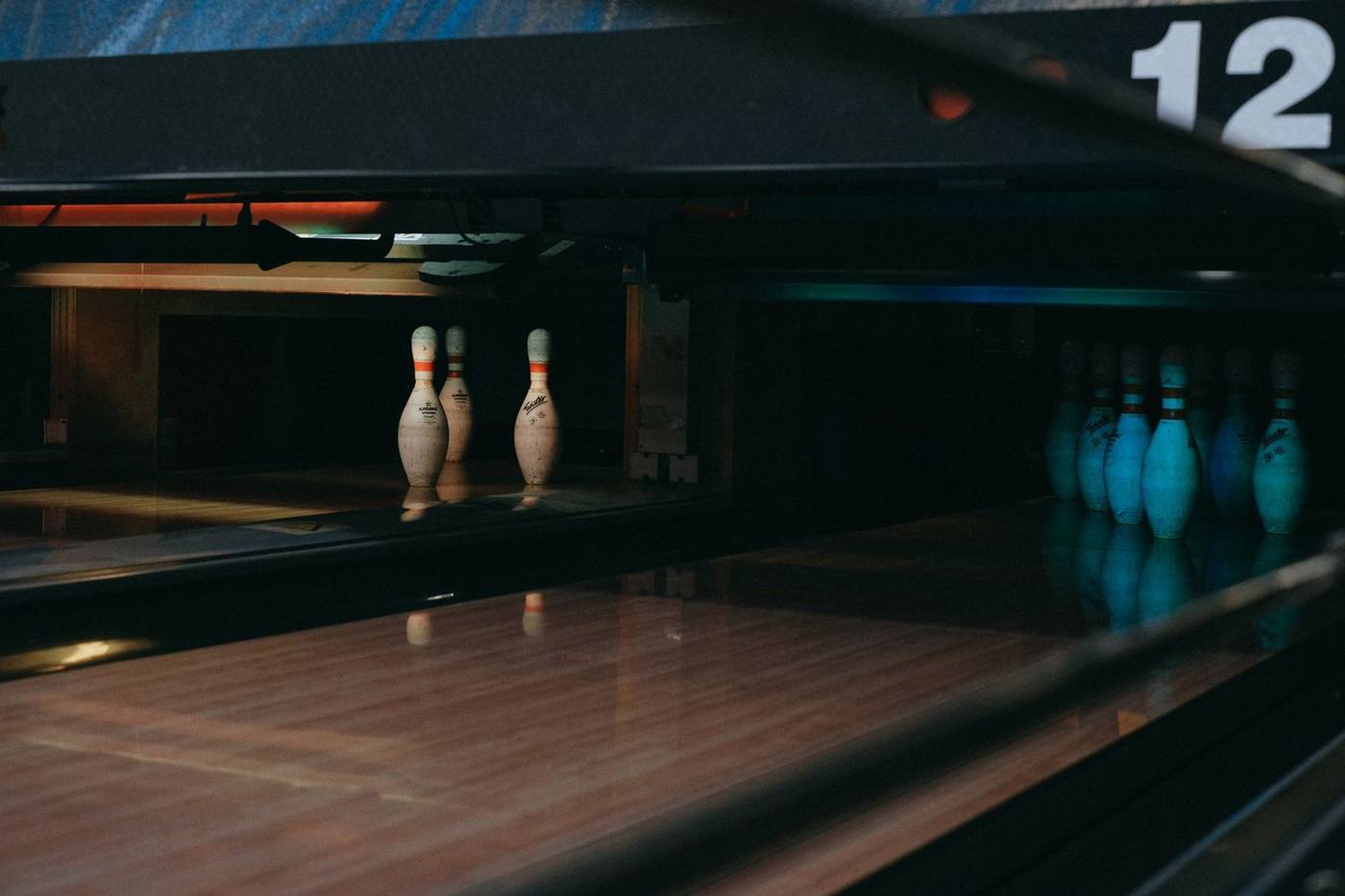
People underestimate bowling because the target sits still and the ball is heavy. The difficulty is that the oil on the lane changes during the game, so the exact shot that struck in the first frame leaves a corner pin in the eighth. You are not playing the pins. You are playing a surface that is quietly moving.
The ones who bowl well are not the strongest. They are the ones who notice the change first and move one board instead of rebuilding their whole delivery. Overreacting costs more than underreacting, because the moment you tear up your motion you lose the baseline that told you anything had changed.
The rest is a boring, identical setup. Same stance, same steps, same release. It is unglamorous and it is the entire game, which is a sentence I could write about most things I care about.
Consistency in the process is the only thing that survives pressure.
Something is always shifting under you. Move one board, not the whole approach.
The overcorrection is usually worse than the original miss.
Because the lane changes while you bowl. The pins never move, but the oil on the lane shifts during a game, so the exact shot that struck in the first frame can leave a corner pin by the eighth. You are really playing a surface that is quietly moving, which is why repeating the same motion matters more than strength.
Notice it early and make a small move. Mark Gabrielli's approach is to move one board rather than rebuild the whole delivery. Overreacting usually costs more than underreacting, because once you tear up your motion you lose the baseline that told you something had changed in the first place.
A boring, identical setup repeated every frame: the same stance, the same steps and the same release. The bowlers who score well are rarely the strongest. They are the ones whose process holds up under pressure, so when the ball reacts differently they know it was the lane and not them.
That consistency in the process is the only thing that survives pressure, that something is always shifting under you, and that the overcorrection is usually worse than the original miss. He applies the same idea well outside the lane: read the change early, make the smallest useful adjustment, and keep the baseline intact.