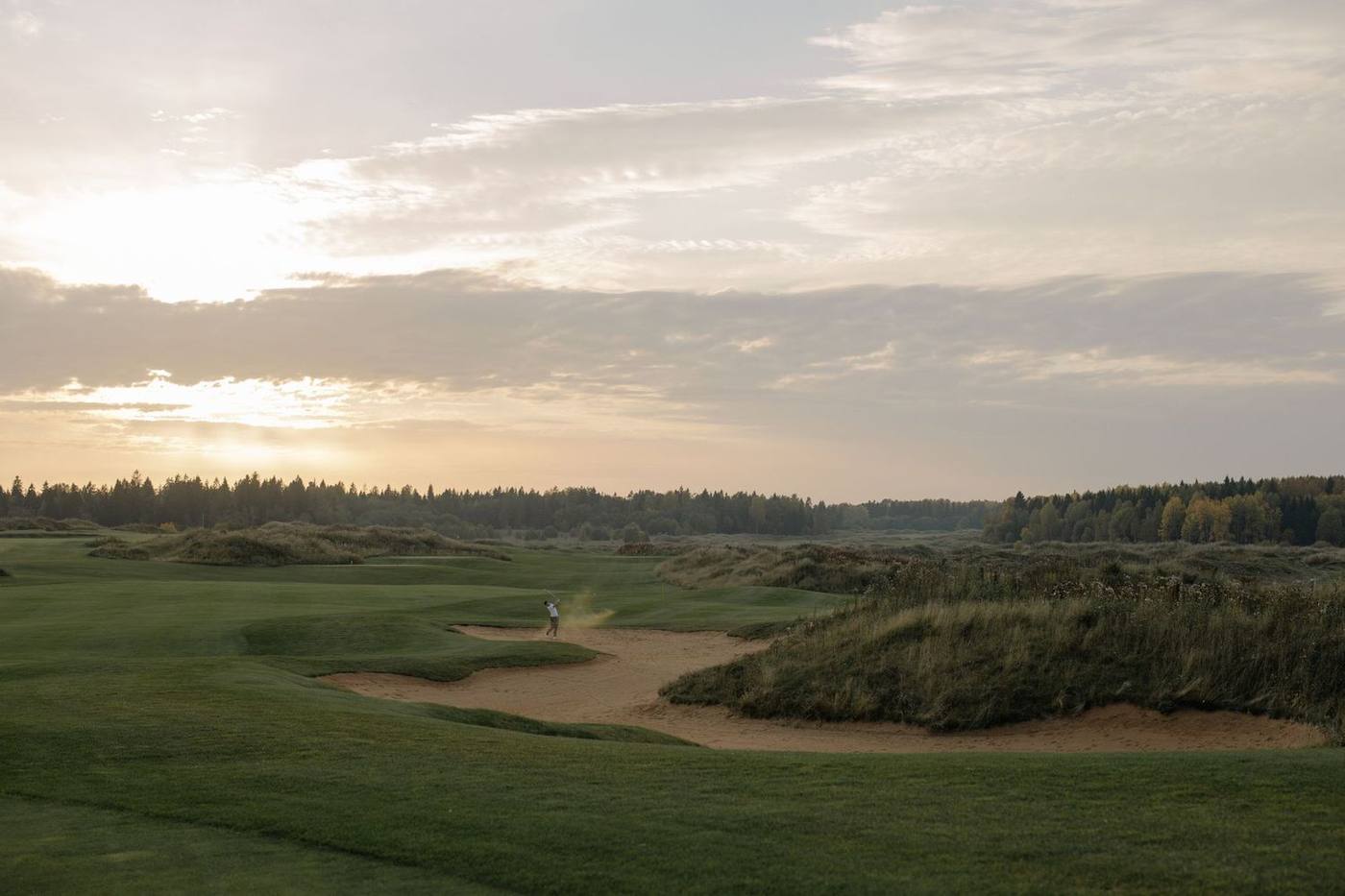
I started with my grandfather and never really put it down. Golf taught me more than anything else I have done, and most of it had nothing to do with the swing.
A PGA Tour pro taught me a three quarter punch with a little cut on it. Learning how the ball spins, and how to make it move where I wanted, took me from a 12 to 14 handicap down to a 3. Not by swinging harder. By swinging easier and thinking better.
My grandfather put a club in my hands when I was young. I got good enough to join the team, and as a freshman in high school I made varsity in the number three spot. That did something to me. Being the youngest one who still had to produce is a useful thing to be early.
Green Pond Country Club was home through high school and college. That is where the reps went in.
Everything shifted when a PGA Tour professional taught me the three quarter swing, the punch, and a little cut. Suddenly it was not about distance. It was spin, flight and control. I could make the ball do what I wanted instead of hoping.
I stopped swinging at 80, 90, 100 percent and started swinging at 60 or 70. My handicap fell off a cliff in the good direction. That is the whole secret and almost nobody wants to hear it, because swinging easier feels like giving something up.
Confidence is what buys you the right to take a risk. You earn it in practice and you spend it on the course. Not the other way around.
What I wish someone had told me at fifteenThe question is never where does this go if I hit it well. It is where does it go if I miss. Is my miss a draw, a hook, a cut, a slice? Once you can answer that honestly you can aim so the bad one is still playable.
The research backs it up. The clubface controls most of where the ball starts, roughly 85 percent with a driver and about 75 percent with a mid iron according to TrackMan, and the path relative to that face puts the curve on it. Once you understand that you are not guessing, you are choosing.
Where is the danger. Where is the safe side. What happens if I miss. Answer those three before you pick a club and you will shoot lower scores this week without touching your swing.
The hardest discipline out here is taking the club that is not the longest but is the most strategic. Nobody claps for that. It is the same feeling as making your bed in the morning: small, unglamorous, and it decides everything downstream.
The data agrees, which surprised me the first time I read it. Shot Scope found that amateurs badly overvalue the fairway. If there is trouble down one side, aiming into the light rough on the safe side scores better than aiming at the middle and flirting with the hazard. A fairway bunker costs an average golfer around 1.4 shots. Light rough costs almost nothing. Those are not the same mistake and we treat them like they are.
Mark Broadie's strokes gained work says the same thing from another direction. The gap between a good round and a bad one is rarely birdies. It is the disasters you did not make.

Not perfect ones. Playable ones. Aim away from the trouble and let the miss be boring.
Middle of the green, almost always. One more club than the ego wants.
It is distance control on the first putt, not the stroke. From 20 feet, think lag.
Get it running on the green early. Use a putter or an 8 iron more often than feels right.
Figures from Shot Scope's amateur shot database.
That is not modesty, it is just true. Nobody on that course is doing anything to me. There is no defender, no clock, and nobody to blame. Whatever is on the card at the end is an honest report on how I managed myself for four hours.
What helps is a routine and committing to it. Bob Rotella has said the thing that kills a swing is indecision over the ball, and the fix is to pick a specific target, see the shot, commit completely, and run the same routine whether you are three under or nine over. I believe that because I have watched the alternative cost me rounds.
The rest is discipline, and discipline is boring on purpose. Make the bed. Brush your teeth. Hit the 7 iron instead of the 5 because the 7 leaves an easy next shot. None of it is impressive. All of it works.
Golf is physics and math and the human element all at once, and the human element decides it. Nobody has ever perfected this game. You only get better, and then better again, and eventually you are playing well against most people while the real fight is still you against yourself.
You cannot do that in a team sport. There is nobody to carry you and nobody to hide behind. For someone who wants to be the best version of himself in the time he has, a game with no ceiling and no perfect score is about the most interesting thing there is.
I am serious about this. If you want to get out for eighteen, reach out and let's do it. I like meeting people on a golf course more than almost anywhere else, because you find out who someone is by about the fourth hole.
One condition: it has to work around my schedule. Family and work come first, so give me some options and we will find a morning.
A PGA Tour pro taught him the three quarter punch shot with a small cut. Learning how the ball spins and how to make it move on purpose mattered far more than swinging hard. That one lesson took him from a 12 to 14 handicap down to a 3.
Because control beats speed for almost every amateur. Dropping from a 90 or 100 percent swing to 60 or 70 makes contact more repeatable, ball flight more predictable, and your miss much smaller. You build back up from there once you trust it.
Deciding where the danger is, where the safe miss is, and picking the shot that leaves the easiest next one. Usually it means less club than you want, aiming at the middle of the green, and accepting a bogey rather than turning it into a triple.
Stop three putting and stop compounding mistakes. Shot Scope found 20 handicap golfers three putt about 19 percent of the time, roughly every fifth hole, and most of that is distance control on the first putt rather than the stroke.
Because you can plan around a miss you understand. If your bad shot is a cut that leaks right, you aim up the left side and the miss stays playable. Trying to hit it dead straight leaves no margin at all.
Yes. He is genuinely open to it, and the invitation on this page is real. Reach out through the contact page with a few options, and if it works around his schedule he will meet you at the first tee. He likes meeting people on a golf course more than almost anywhere, because you find out who someone is by about the fourth hole.